
*As an Amazon Associate, I earn from qualifying purchases.*
7 Secrets to Master the Ultimate Authentic Moroccan Tagine
“A traditional Moroccan Tagine is more than just a dish; it is a timeless culinary ritual that connects the modern kitchen to the ancient Berber lifestyle.”
Whether you are a complete beginner or an experienced home cook looking to expand your international culinary skills, understanding how to prepare an authentic Moroccan Tagine is the ultimate key to creating tender, intensely flavorful meals that will impress your guests every single time. In this comprehensive guide, we will break down everything you need to know, from selecting your very first clay vessel to mastering the delicate balance of spices and the final art of serving. Let’s dive straight into the beautiful art of slow-cooking.
 Inside The Moroccan Kitchen
 What is a Moroccan Tagine?
To truly master this style of cooking, one must understand that a Moroccan Tagine refers to two things simultaneously: the unique clay cooking vessel itself, and the slow-cooked, deeply aromatic stew that is carefully prepared inside it. The brilliant, iconic cone-shaped lid is not just for aesthetics; it is the absolute scientific secret to its culinary success over thousands of years.
This unique conical shape works by trapping steam as the food cooks slowly over low heat. The steam rises into the cone, condenses on its relatively cooler clay surface, and gently drips back down onto the meat and vegetables below. This creates a continuous, natural cycle of moisture retention, ensuring that even the toughest cuts of meat remain exceptionally succulent while allowing the vegetables to slowly absorb all the rich, aromatic spices without ever burning or drying out.
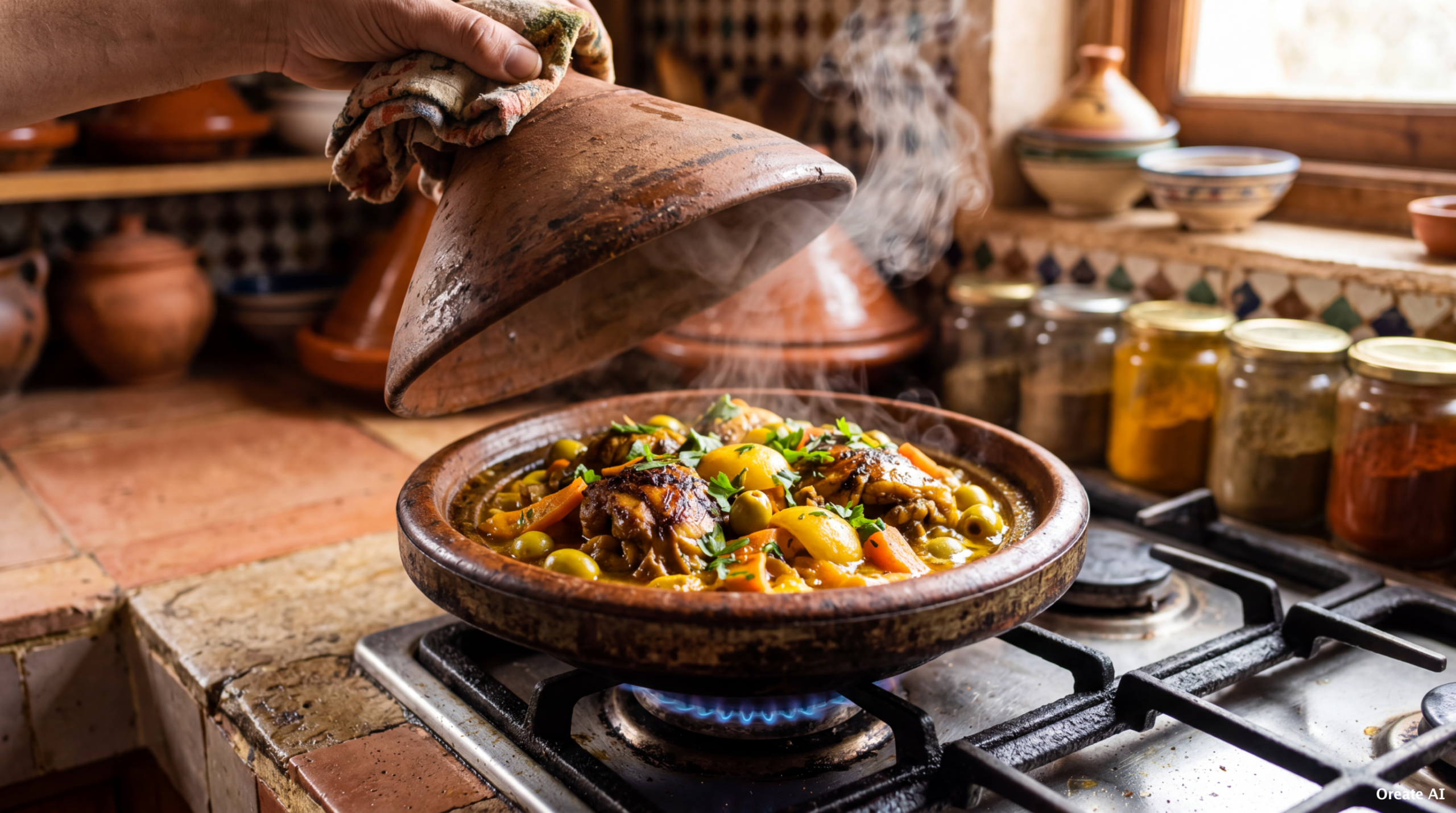
The slow condensation magic inside a clay Tagine.
 Choosing Your Authentic Vessel
When exploring modern marketplaces, you will quickly realize that not all cooking pots are created equal. When buying your first Moroccan Tagine, you will have to make a choice between a traditional unglazed clay pot and a modern glazed ceramic version. Unglazed pots are heavily favored by purists because they impart a distinctly rustic, earthy flavor to the food, but they do require a bit more attention and care throughout their lifetime.
If you do not own an authentic North African pot yet and want to start your culinary journey the right way, you can easily explore the best clay Moroccan Tagine options on Amazon. Selecting the correct size for your family needs is absolutely crucial for achieving even heat distribution across the base.
 How to Season Your Clay Pot
Before you ever think about placing a brand new traditional Moroccan Tagine on a hot stove, you must undergo the essential process of seasoning it. This is a vital, non-negotiable step designed to strengthen the porous clay structure and prevent the vessel from cracking under heat pressure. Skipping this ritual is the number one mistake beginners make.
The Traditional 4-Step Seasoning Method:
 Soak the Vessel: Fully submerge both the shallow base and the conical lid in clean water for at least 6 to 12 hours to hydrate the dry clay thoroughly.
 Complete Air Dry: Remove it from the water and let it air dry completely for a few hours until the surface moisture completely vanishes.
 The Olive Oil Rub: Generously rub the entire interior of the base and the lid with high-quality extra virgin olive oil, allowing the porous clay to drink it up.
 The Oven Cure: Place the oiled pot into a cold oven, turn the heat up to a low 300°F (150°C), and let it bake slowly for 2 hours before turning off the heat and letting it cool inside completely.
Skipping this traditional curing ritual almost always leads to a sudden thermal shock, which can destroy your beautiful new Moroccan Tagine instantly. When dealing with traditional clay, patience is always going to be your best kitchen ingredient.
Step-by-Step Cooking Guide
Cooking a spectacular Moroccan Tagine is an exercise in pure mindfulness and relaxation. You must never attempt to rush the process using a high flame heat. Because direct heat will instantly crack the clay base, you must always place a sturdy metal heat diffuser between your stovetop burner and the pot. We highly recommend using a dedicated Stovetop Heat Diffuser from Amazon to safeguard your cookware from high temperatures.
To begin building the dish, start by layering a heavy bed of chopped aromatic onions and olive oil right at the bottom. This acts as a natural heat shield for the meat. Next, place your seasoned meat or poultry in the center, and meticulously arrange your vegetables in a beautiful conical shape around it. Dust the entire structure with a masterful blend of ginger, cumin, paprika, turmeric, and black pepper. If you want to learn more about the fascinating cultural origins of these ingredients, feel free to explore our dedicated historical section on traditional North African food culture.
Once the lid is securely closed, leave it alone. Resisting the urge to constantly open the lid is key to preserving the continuous pressure loop inside. A perfectly cooked Moroccan Tagine is ready when the meat falls off the bone effortlessly, the vegetables become butter-soft, and the liquids reduce into a incredibly rich, caramelized glaze at the base.
If you want to discover more advanced, authentic step-by-step regional recipes from across the Atlas Mountains, checking out the best Moroccan Tagine cookbooks on Amazon is an excellent way to elevate your skills.
 Conclusion & Serving
Mastering the traditional art of the Moroccan Tagine takes a little bit of time and practice, but the aromatic and deeply flavorful results are absolutely worth every single second of effort. By respecting the ancient culinary customs, choosing your cookware wisely, and taking the time to properly cure and season your pot, you bring a genuinely authentic piece of rich, vibrant North African history straight into the heart of your modern home kitchen.
 Bon Appétit! Gather your loved ones around, and remember to serve your masterpiece with warm crusty bread to absorb every single drop of those golden, spiced juices.