
Juba II: The Scholar King of Mauretania
Juba II of Mauretania was far more than a monarch; he was one of the most brilliant Amazigh philosophers and polymaths of the ancient world. Educated in the heart of Rome, he transformed his kingdom into a global center for arts, science, and historical research.
His intellectual legacy is anchored in his lost works, such as Libyka, which served as the primary source for Greek and Roman historians. Under Juba II, the city of Volubilis flourished, blending Amazigh identity with Mediterranean sophistication.
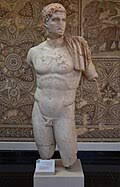
The Intellectual Legacy: Science and Exploration
Beyond his political role, Juba II of Mauretania was a true polymath. He is credited with discovering the Euphorbia plant (named after his physician Euphorbus) in the Atlas Mountains, showcasing his deep interest in botany and pharmacology.
His curiosity led him to organize naval expeditions to the Canary Islands and the Madeira archipelago. His detailed geographical records became a cornerstone for later Roman scholars like Pliny the Elder. As one of the most respected Amazigh philosophers, his library in Mauretania was a sanctuary for Mediterranean wisdom and North African heritage.
The Polymath King: Explorations & Botany
Juba II’s intellectual contributions were immense. He authored the Libyka and sponsored naval expeditions to the Canary Islands. His discovery of the medicinal Euphorbia plant in the Atlas Mountains showcases his legacy as a scientist whose work influenced Roman scholars for centuries.
Caesarea: The Hellenistic Jewel of North Africa
When Juba II was granted the kingdom of Mauretania in 25 BC, he didn’t just rule a territory; he built a civilization. Alongside his intellectual partner and wife, Cleopatra Selene II, he chose the ancient Phoenician port of Iol and transformed it into Caesarea (modern-day Cherchell, Algeria). This city was meticulously designed to rival the grandeur of Rome and Alexandria, serving as a beacon of urbanization and economic prosperity for the entire region.
The architectural landscape of Caesarea was a testament to Juba II’s sophisticated taste. Under his reign, the city was adorned with magnificent marble theaters, grand amphitheaters capable of hosting thousands, and sophisticated aqueducts that secured a steady water supply for its growing population. These public works were not merely functional; they were decorated with Greek sculptures and Roman motifs, creating a unique hybrid culture that blended Amazigh identity with Mediterranean elegance.
Beyond the infrastructure, Juba II promoted a thriving economy based on the export of Tyrian purple dye, grain, and timber. He established trading colonies along the Atlantic coast, including the famous purple production center at Mogador (Essaouira). This strategic economic development ensured that Mauretania remained a vital part of the Roman trade network, while the capital, Caesarea, stood as a sanctuary for libraries and scholars, reflecting the king’s unwavering dedication to philosophy and learning.
The Eternal Legacy of Juba II
The death of Juba II in AD 23 marked the end of an era, but his intellectual and cultural impact remained etched in the stones of Mauretania. Buried in the magnificent Royal Mausoleum of Mauretania (Tombeau de la Chrétienne) alongside his wife Cleopatra Selene II, he left behind a kingdom that was a sanctuary for Mediterranean wisdom and Amazigh innovation.
His scholarly contributions, particularly the Libyka, served as a vital bridge between North African geography and Roman science, ensuring that the Amazigh philosophers of his time were recognized in the classical canon. From the discovery of the Euphorbia plant to the exploration of the Canary Islands, Juba II proved that a monarch’s greatest conquest is the pursuit of knowledge and the enlightenment of his people.
Today, the ruins of Volubilis and Caesarea stand as silent witnesses to his vision—a fusion of cultures that defined an exceptional period of stability and economic prosperity. Juba II remains an immortal figure, a true philosopher-king whose legacy continues to inspire those who value the intersection of heritage, science, and leadership.
