
More Than Decoration
Amazigh jewelry is not merely an accessory; it is a profound visual language. For centuries, Amazigh women have worn silver pieces that tell stories of tribal identity, protection, and spiritual beliefs. Unlike many ancient cultures that favored gold, the Amazigh chose silver for its purity and lunar symbolism.
Key Symbols & Meanings
Every motif engraved in a pendant or woven into a carpet has a specific meaning:
- The Yaz (ⵣ): Representing the “Free Man,” it is the ultimate symbol of life and resilience.
- The Fibula (Tiseghnest): A triangular brooch representing womanhood and fertility.
- Geometric Patterns: Diamonds and triangles are often used to ward off the “evil eye” and bring protection.
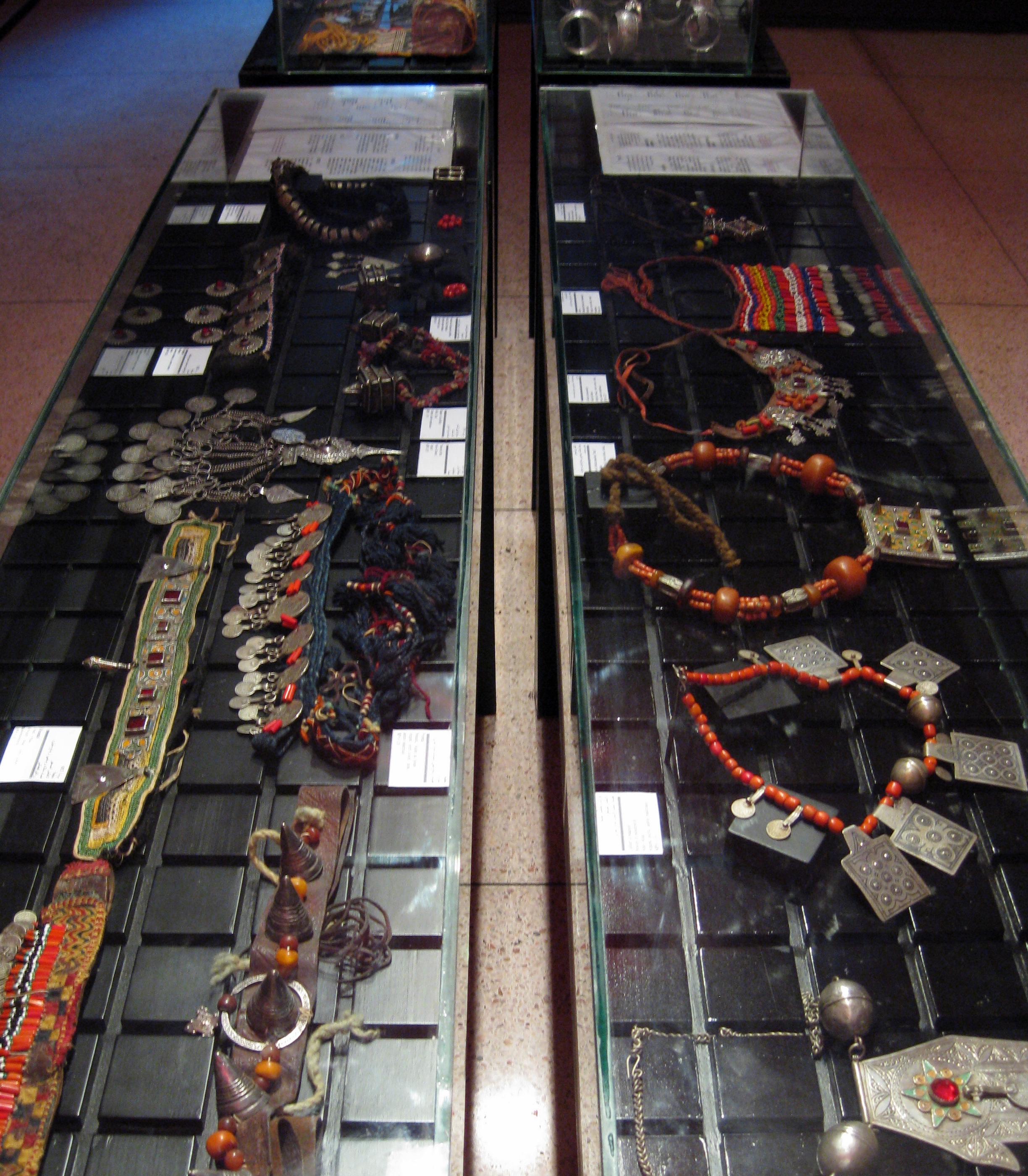
“Historical Artifact: Traditional jewelry exhibition at the Municipal Museum of Agadir.”
A Living Legacy
Today, these symbols have moved beyond silver and wool. They are found in modern art, tattoos, and even digital design, proving that the Amazigh Legacy is not just a thing of the past, but a vibrant part of the present.
Discover History: While symbols tell stories of life, the ruins of Volubilis tell the story of great ancient civilizations.
Pingback: Yennayer: the Living Legacy of the Amazigh New Year
Pingback: Jewish Heritage in Sous: Coexistence & Silver Craft | Amazigh Legacy