
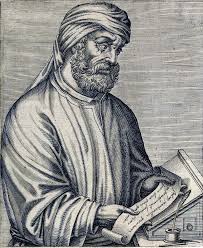
Tertullian of Carthage: The Fierce Defender of African Logic
Tertullian of Carthage (Quintus Septimius Florens Tertullianus) stands as a monumental figure in the history of Amazigh philosophers. Born around 155 AD in the vibrant heart of ancient Tunisia, this brilliant lawyer and rhetorician was the first to use Latin in Christian literature, forever earning his title as the “Father of Latin Theology.”
His identity was profoundly North African, embodying the stubborn, independent, and intellectual spirit of the Amazigh-Punic culture. Tertullian was not just a scholar; he was a revolutionary thinker who famously asked, “What has Athens to do with Jerusalem?”. This question perfectly captured his desire to separate pure spiritual truth from Greco-Roman intellectual dominance, a perspective deeply rooted in his proud regional heritage.
By choosing to write in Latin rather than Greek, Tertullian of Carthage pioneered a new intellectual language for the North African elite. His legal training defined his writing style—precise, aggressive, and logically airtight—which he used to defend his beliefs with the same intensity a soldier would use to defend a fortress. He remains a symbol of how the shores of North Africa exported logic and wisdom to the rest of the world.

Carthage: The Legal Mind of North Africa
Born in Carthage, the vibrant heart of Roman Africa, Tertullian was the son of a centurion in the service of the proconsul of Africa. Unlike many of his contemporaries who sought wisdom in Greek philosophy, Tertullian was trained as a jurist and lawyer. This legal training defined his writing style—precise, aggressive, and logically airtight.
His identity was profoundly North African. In his works, he often displayed a fierce loyalty to his homeland, criticizing the decadence of imperial Rome. By choosing to write in Latin rather than Greek, he pioneered a new intellectual language for the Amazigh-Punic elite, forever changing the course of Western literature and legal thought from the shores of Tunisia.
The Master of Logic: Paradox and Truth
Tertullian was a master of the paradox. He famously argued that the strength of a truth often lies in its defiance of human logic. His most significant contribution to global thought was his coining of the term “Trinitas” (Trinity), a concept that became the cornerstone of Western theology. Yet, his approach was always that of a North African lawyer—defending his beliefs with the same intensity a soldier would use to defend a fortress.
Among his many works, “Apologeticus” stands as a masterpiece of legal defense. In it, he demanded justice and religious freedom for his people, challenging the Roman authorities with a sharpness that reflected the Amazigh spirit of resistance. He did not just write books; he built an intellectual wall that protected the African identity from being swallowed by the cultural hegemony of Rome and Athens.
A Lasting Legacy: The Soul of Carthage
The intellectual shadow of Tertullian of Carthage covers nearly two thousand years of Western history. His ability to fuse law, logic, and spirituality created a framework that would later be used by thinkers like Augustine. However, to truly understand Tertullian, one must look at him as a North African visionary. He was a man who refused to compromise, a trait often associated with the Amazigh character throughout history.
As we conclude our look at this titan of logic, we recognize that Tertullian was more than just a writer; he was a bridge between the ancient Punic world and the Latin future. His voice, echoing from the ruins of Carthage in modern-day Tunisia, serves as a reminder of the immense contribution of Amazigh philosophers to the global library of wisdom.
Pingback: 5 Legendary Amazigh Philosophers Who Changed World History Forever